Why Properties Don't Sell
And Where to Fix It
Proview Living Edition
Jern has encountered properties with great locations and prices that remained unsold for many years — the problem wasn't with the property itself. This article reveals the real reasons why properties are hard to sell, factors that make them easier to sell, and how to diagnose your own property.
1. Property Not Selling, Where's the Problem?
When a property doesn't sell, most owners tend to blame these things first:
- "The market is bad, the economy is sluggish."
- "People don't have money to buy, bank loans are not approved."
- "Location isn't good enough, too much competition."
These factors do have an impact, but in Jern's experience, most properties that don't sell often have solvable reasons and are not directly related to the market or economy.
A property is like an item in a store. If the item is good but has no price tag, is misplaced, and no one knows it's for sale — it won't sell. The problem isn't the item, but the presentation.
— Jern · Proview Living
2. 5 Main Reasons Why Properties Are Hard to Sell + Solutions
Many property owners set prices "for negotiation" or based on their perceived value, not the actual market price. The result is that customers who see the price and know it's more expensive than other properties in the same area will immediately skip it and look at other properties without even contacting them.
The hidden problem is that the longer a property stays on the market with a high price, customers start to wonder, "Is there something wrong with it?" and use this to drive the price down further, repeating an endless cycle.
Ask the agent to analyze the real market price from properties actually sold in the same area, not prices set by other owners. Then set a price that is not for negotiation but is reasonable for the actual condition. Properties priced correctly from the start always sell faster.
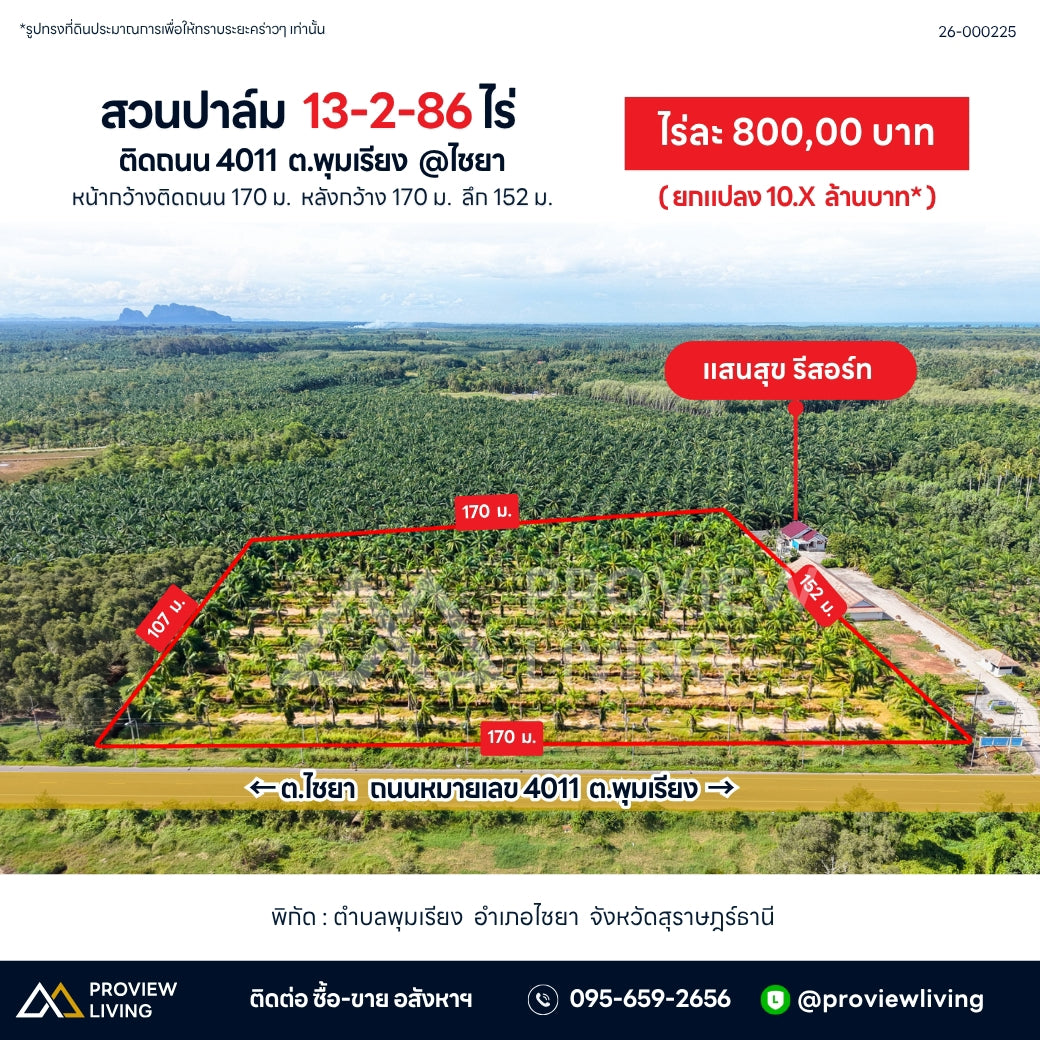
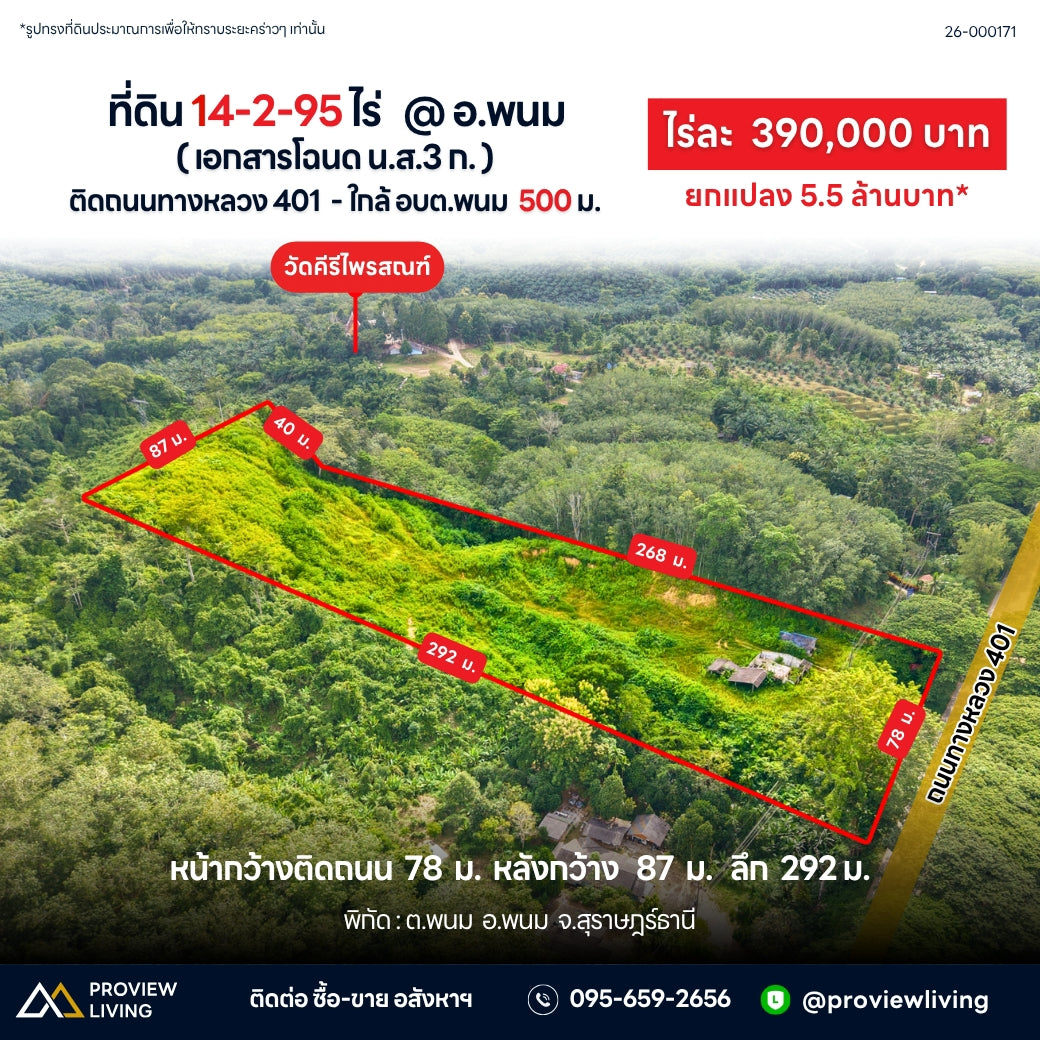
Good properties with dark, blurry photos or photos that don't highlight key features will immediately be skipped by customers who see them first, in favor of more appealing properties. In an era where everyone views properties online first, photos and videos are the "front door" that customers see before anything else.
Besides photos, the content written to describe the property is also very important. If it only states the size and price without explaining "who this property is suitable for and what kind of lifestyle it meets," customers won't feel connected to the property.
Take new photos with natural light, emphasize the property's highlights, shoot walk-through videos, and write content that explains who the property is suitable for, what problems it solves in life, and why the price is worthwhile.
Each type of property has a very different target customer. For example, land on a main road in the city center, the real customers are investors or people wanting to open a business, not people looking for a home. Dormitories near hospitals, the real customers are investors looking for yield, not people looking for long-term housing.
If you market the property to the wrong group, or target ads to the wrong people, you'll only get people who look and pass by, with no serious inquiries. This is why some properties have a lot of views but no inquiries at all.
Before marketing, you must answer the question: "Who is the real customer for this property? What problems or needs do they have? And how does this property meet their needs?" Then, present it in a way that aligns with those answers.
Customers who regularly search for properties will notice which ones have been listed for a long time. They often immediately question, "Why hasn't it sold for so long? Is there a hidden problem?" Then, they use the long listing time as leverage to negotiate the price down.
Even worse, if the property is listed with multiple agents simultaneously, some with different prices, some with inconsistent photos, customers will feel that the property is not trustworthy.
If the property has been on the market for a long time without results, stop and reset. Withdraw the property from all agents, adjust the price to align with the real market, take new photos, and relaunch it with an Exclusive agent who has a clear plan. "Newly launched" properties tend to attract more attention than properties that have been on the market for a long time.
Simply "listing" on property portals is no longer enough. Current customers find properties through TikTok, YouTube, Facebook, LINE, and recommendations from acquaintances. Waiting for customers to come to you is a huge missed opportunity.
Especially if the property is high-priced, e.g., 10–30 million, the buyer group is even smaller and more specialized. Marketing must target specific investor networks, not a general mass approach.
Choose an agent with truly active online channels, a follower base that matches the property's customer group, and a network of Co-Agents with VIP investors ready to receive new property information.
3. 4 Factors That Make Properties Sell Faster
From experience, properties that sell within a reasonable timeframe usually have at least 2-3 of these factors:
Price lower than or equal to the real market value
Customers who know the price is "better than elsewhere" will decide quickly and not negotiate for long, for fear of missing out.
Location has clear advantages over competitors
On a main road, near amenities, or in a developing zone, makes the decision much easier.
Good condition, little renovation needed
Most customers don't want the burden of renovation costs. Properties that are ready for immediate use always sell faster.
Few comparable options in the market
If this type of property is rare in this location, customers will decide quickly because they know they won't find it again if they miss out.
Jern's Observation: Properties with all the above factors almost sell themselves. But most properties only have 1-2 factors. A professional agent must therefore make the existing strengths as prominent as possible and present them to the right people.
Price higher than market + Needs renovation
These two factors combined are the main trigger that makes properties remain unsold for the longest time.
Wrong target marketing + No agent truly responsible
A good property won't sell if no one brings it to the attention of the right people.
4. Diagnose Your Own Property
Try answering these questions yourself. If most of the answers are red, it indicates areas that need correction.
If most answers are ⚠️: Your property might not have a problem with the property itself. The problem might be with the price, presentation, and selling methods, all of which can be fixed if you restart with the correct approach.
5. True Story — A Good Property That Didn't Sell, Fixed and Closed in 1 Month
Jern would like to share a real example that happened with Proview Living.
A property with a very good location and reasonable price had been entrusted to many agents for a long time but still hadn't sold. This was because all agents were considerate of each other, and no one dared to put up a sign or create serious content. As a result, potential customers who should have known about the property didn't even realize it existed.
After Proview Living took on the property exclusively, analyzed who the real customers were, revamped its image, and created content specifically targeting the right audience — the property was closed within 1 month.
Lesson: The problem was not with the property itself, nor with the market, but with the seller not understanding the property and not knowing the real customer. Having multiple agents who are too considerate of each other ultimately means no one takes responsibility.
An unrenovated old house was priced by the owner at 2.6 million, even though the market price in the same project was 2.4 million. After 3 months, the property was still stagnant. Jern invited the owner to analyze the market together and suggested a price of 2.25 million with no room for negotiation. The owner agreed — and the deal was closed within 1 month, bringing the total selling time to just 4 months.
Lesson: A price "for negotiation" often becomes a price that doesn't sell. Professional agents must dare to tell the truth about pricing, not just accept any price to get the listing.
6. How Proview Living Can Help
When a property comes into Proview Living's hands, the first thing we do isn't to immediately list it for sale. Instead, it's to analyze where the problem lies.
- Analyze the real market price against properties actually sold in the same area, and boldly state the appropriate price based on reality.
- Analyze who the real customer for this property is, what problems or needs they have, and how the property meets their needs.
- Take new photos and videos that clearly showcase the property's highlights.
- Create content and run paid ads specifically targeting the right audience only for properties with reasonable prices.
- Distribute the property to VIP networks and Co-Agents to increase sales opportunities.
- Provide regular progress reports, transparently throughout the entire process.
Proview Living's Stance: We do not accept properties for sale at any price. Because we must be honest with both property owners and investors who trust us to buy from us. Our credibility must be balanced — if your property is reasonably priced and you are willing to work together, Jern is ready to give it her all.
Want Jern to analyze your property to find out where the problem is?
It's free, with no obligations. Just talk to us first.
Call 095-659-2656 · www.proviewliving.com